
Most people planning a custom home are not going to need an entire room devoted to displaying artwork.
But almost everyone owns something they care about enough to hang where it can actually be seen.
That might be a large painting, a photography collection, sculpture, family pieces, or work purchased from one of the many artists who call Western North Carolina home. If art is important to you, it is worth talking about where it will go before the house is finished.
And if you happen to need considerably more than a few good walls, Brock Builders has experience with that too.
When the Art Gets Its Own Room
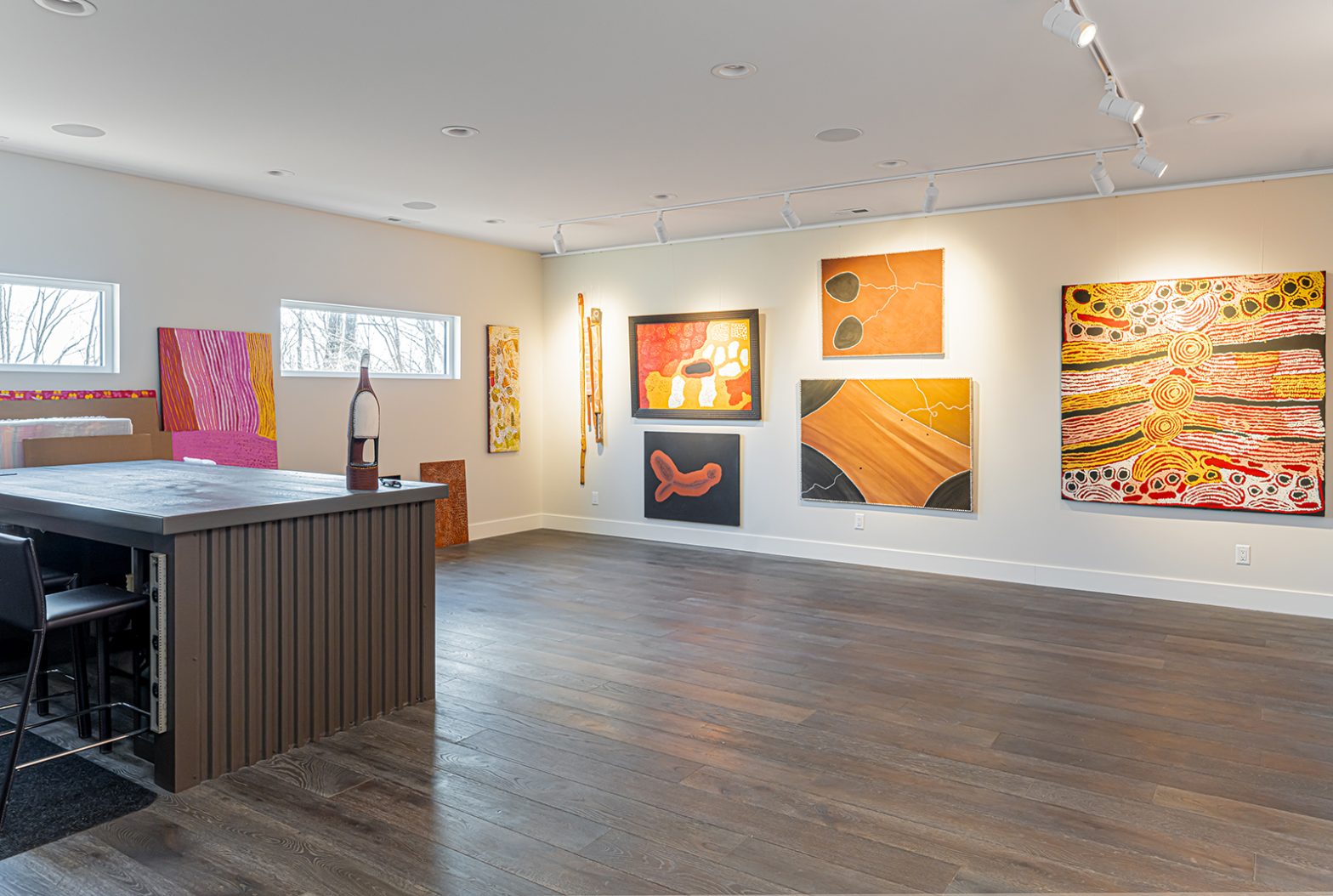
The room shown here was created with art in mind.
One of the first things you notice is the track lighting running around the ceiling. Individual fixtures can be aimed toward different pieces rather than relying on a single overhead light to illuminate the entire room. There are also recessed fixtures and plenty of open wall area, allowing artwork of very different sizes to be displayed without the room feeling crowded.
That is a much different situation from finishing a house and then discovering that the best wall for a favorite painting is poorly lit, broken up by switches, or too short for the piece.
For someone who collects art, works with artists, or creates art themselves, those details can become part of the conversation while the home is being built.
You Don’t Need an Art Gallery to Plan for Art
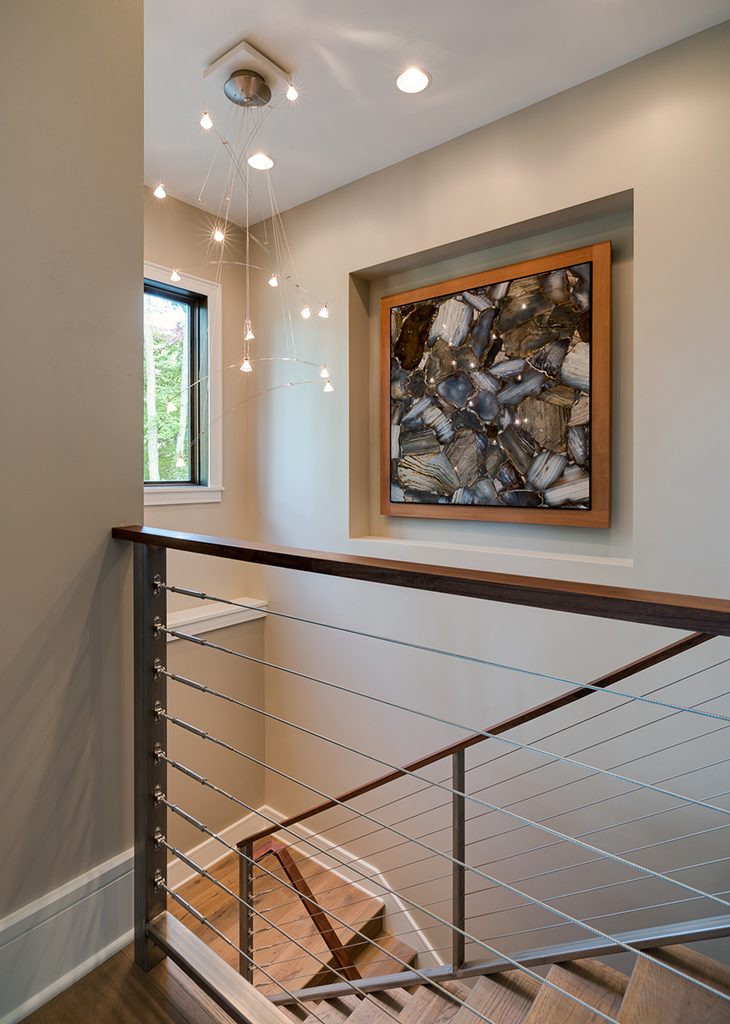
A dedicated gallery or studio is a specialized feature. The same thinking, however, can be useful in an ordinary living room, hallway, stairway, dining room, or home office.
If you already own an important piece, know approximately where you would like it displayed. Look at the available wall space. Think about what will be across from it. Consider where windows bring daylight into the room and what kind of lighting will be available after dark.
A large painting may need considerably more wall than you expect once furniture is added. A sculpture may need floor space where people will not constantly walk around it. A collection of smaller pieces may work better on one uninterrupted wall than scattered throughout the house.
Those aren’t enormous construction decisions, but knowing about them early can prevent compromises later.
Lighting Can Change the Way the Room Works
The photograph from this Brock project is a particularly good example of what dedicated lighting can accomplish.
Rather than asking one central fixture to do everything, the ceiling-mounted track gives the homeowner multiple sources of directional light. As artwork changes, those fixtures can be aimed toward different areas.
That flexibility matters in a gallery, but there are plenty of less specialized places where it can be useful too. A hallway containing several paintings, a large piece over a fireplace, or a sculpture in an entry can all benefit from lighting that was planned with the feature in mind.
There is also natural light to consider. Windows can make a room beautiful, but their location affects the amount of usable wall space and how sunlight reaches the artwork during the day.
The point is not that every piece of art needs its own spotlight. It is simply easier to make good decisions about walls, windows, electrical locations, and lighting when everyone knows what the homeowner intends to put there.
For Artists, the Questions Get More Specific
Western North Carolina has a substantial arts community, so for some homeowners this goes beyond displaying a collection.
A working artist may need a studio with very different requirements from the rest of the house.
A painter may want strong, consistent light and room for large canvases. Someone working with sculpture may need durable flooring, additional work surfaces, or wider access for moving pieces in and out. Storage can become important very quickly. So can electrical service, sinks, ventilation, and the relationship between the studio and the living areas of the home.
The answers depend heavily on what the homeowner actually does in the space.
That is what makes this particular Brock project such an interesting example. A specialized room did not have to be treated as an afterthought. The home could accommodate something that mattered specifically to its owner.
Custom Homes Can Make Room for Unusual Priorities
This is also where the meaning of “custom” starts to become more interesting.
The feature that matters most to one homeowner may be completely irrelevant to another.
One person may want an art studio. Someone else may care more about a home theater, wine cellar, sauna, workshop, oversized pantry, or a place to wash the dogs after a muddy afternoon outside.
There does not need to be a standard list.
The useful question is: What do you want to be able to do in your home?
Once the builder, architect, and other professionals involved in the project understand that, the construction can account for the spaces and features needed to make it possible.
Build Around the Things That Matter to You
If displaying or creating art is an important part of your life, bring it into the conversation early. If it isn’t, the same principle still applies.
Your custom home should account for the things you actually own, the activities you enjoy, and the way you expect to use the rooms.
Brock Builders has experience constructing highly detailed custom homes and unusual specialty spaces throughout Hendersonville, Asheville, and Western North Carolina. For homeowners seeking a luxury custom home builder in Hendersonville, NC, that experience can be especially valuable when the wish list includes something that doesn’t come from a standard set of plans.
Sometimes that means creating a full art gallery or studio.
Sometimes it simply means making sure your favorite painting finally has the right wall.