
A fireplace can look terrific in a photograph and still sit cold most of the year.
The problem is rarely the stone, mantel, or firebox. More often, the fireplace is inconvenient to operate, produces the wrong amount of heat, competes with the television, or sits where furniture does not naturally gather.
With cooler Western North Carolina evenings approaching, it is worth asking a practical question: What makes one fireplace part of daily life while another becomes scenery?
Begin With How You Will Use It
Before choosing materials or dimensions, decide what the fireplace is supposed to do.
Will it provide meaningful heat during winter? Is it mainly there for atmosphere? Will it anchor a great room, add warmth to a primary suite, or extend the use of a covered porch? Do you picture building wood fires on weekends, or pressing a button after dinner?
Those answers affect nearly every other decision.
A large wood-burning fireplace may be perfect for someone who enjoys splitting, stacking, and carrying firewood. Another homeowner may admire that same fireplace but rarely light it. A gas unit offers less ceremony, but the convenience often means it gets used more frequently.
The right choice is the one that suits the household, not the one that looks most impressive in a showroom.
Placement Has Consequences
A fireplace naturally draws attention, so its location affects furniture placement and movement through the room.
If it is tucked into an awkward corner, blocked by a walkway, or placed where seating cannot face it comfortably, people may never gather around it. A fireplace located near the main seating area has a better chance of becoming part of the room’s routine.
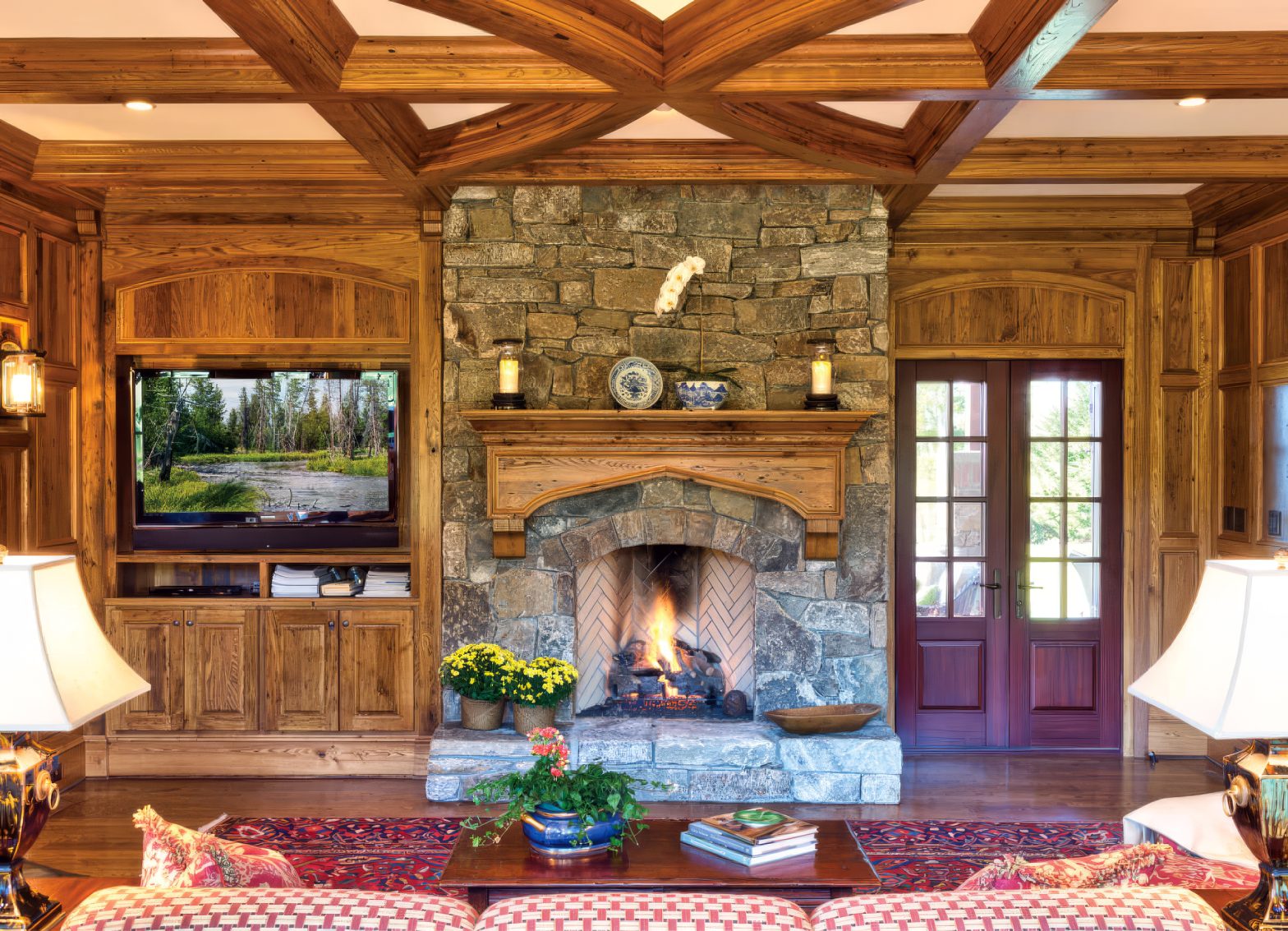
The television also needs to be considered. Mounting one above the mantel may solve a layout problem, but the screen can end up too high or exposed to more heat than expected. In some rooms, placing the television beside the fireplace works better. In others, separate areas make more sense.
There is no automatic answer. The room, furniture, and habits of the homeowners should settle the question.
Size the Fireplace for the Room
A fireplace suited to a small den may look undersized in a two-story great room. An oversized unit in a compact room can make the space uncomfortably hot.
Ceiling height, room volume, insulation, window area, and adjoining spaces all affect how heat moves. Open layouts may allow warmth to travel, while tall ceilings can hold much of it overhead.
Visual scale matters too. A narrow firebox can look lost beneath a broad chimney mass. A mantel that works in one room may appear too slight against a taller wall.
Choose the fireplace with the entire room in mind, not from a product photo viewed by itself.
Pick a Fuel Type You Will Actually Use
Each fuel type comes with its own routine.
Wood-Burning Fireplaces
Wood provides the sound, aroma, and hands-on ritual many people associate with a mountain home. It can also supply substantial heat.
It requires work. Firewood must be stored somewhere dry and reasonably close. Ash needs to be removed. The chimney requires maintenance. Starting and tending a fire takes time.
For homeowners who enjoy that process, those tasks are part of the appeal. For those who do not, the fireplace may remain unused.
Gas Fireplaces
Gas units start quickly, require less cleanup, and offer easier control over heat output. They work especially well when someone wants an hour of warmth without committing to a full wood fire.
Flame patterns and log sets vary widely, so product selection still matters. A gas fireplace should fit the room rather than look like an appliance inserted at the last minute.
Electric Fireplaces
Electric units can be useful where venting or fuel access is difficult. They are simple to operate and can provide supplemental heat, although the experience is different from wood or gas.
They may be a practical choice for secondary rooms or renovations with structural limitations.
Give People a Reason to Sit Near It
A fireplace does not become a gathering place simply because it exists.
There needs to be enough room for seating, a clear view of the fire, and some separation from regular traffic paths. A hearth can provide an informal perch. Built-in benches or nearby chairs can make the fireplace a destination instead of a backdrop.
Think about how many people will use the room. Two chairs may be enough for a private sitting area. A great room used for family visits and holidays will need a different arrangement.
A large custom home may include several fireplaces, but each should have a clear purpose. One might anchor the main living room. Another may serve a covered porch. A third could add warmth to a smaller room used by one or two people.
Plan for Firewood, Ash, Controls, and Service
Finished photographs rarely show ash buckets, wood racks, gas controls, fireplace tools, or soot. Real life includes all of them.
A wood-burning fireplace needs a sensible place for fuel and tools. Carrying logs through a formal entry or across light carpet gets old quickly. Nearby storage and a convenient outdoor route can make the fireplace far easier to use.
Gas controls should be accessible without becoming a distraction. Service access matters too. Equipment will eventually need inspection or repair, and that work should not require dismantling cabinetry or stonework.
These details are not glamorous, but they often determine whether the fireplace remains convenient years later.
Choose Materials That Can Handle the Job
Stone, brick, tile, metal, and wood can all give a fireplace character, but appearance is only part of the decision.
Surrounding materials must suit the heat produced by the unit and meet required clearances. Hearth surfaces should tolerate sparks, ash, and repeated cleaning. Mantels and nearby cabinetry need enough distance from the firebox.
Outdoor materials face additional demands from rain, humidity, temperature swings, pollen, and seasonal debris.
The fireplace should still look good after years of use, not only on the day the project is photographed.
Outdoor Fireplaces Need More Than a Nice View
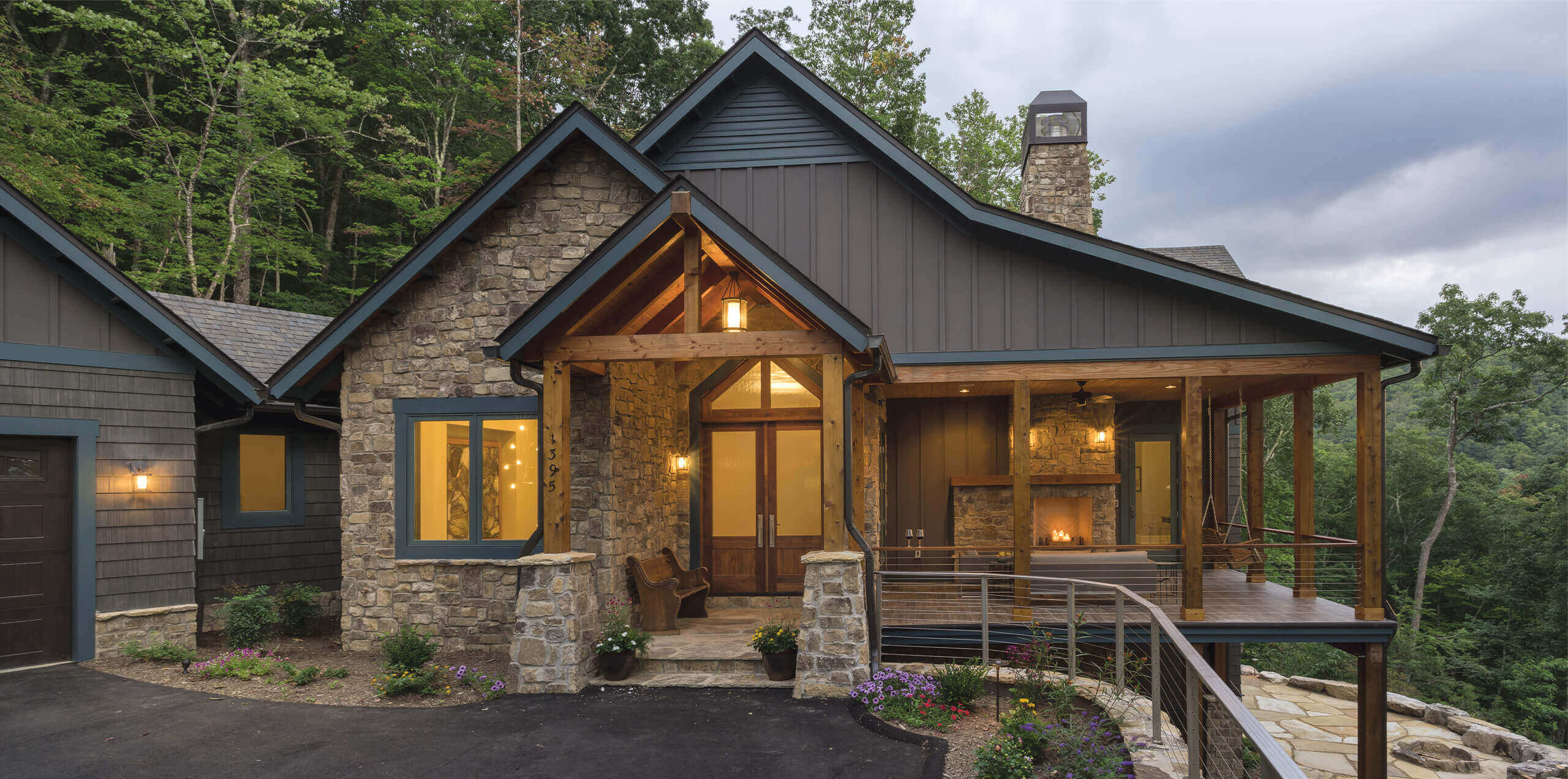
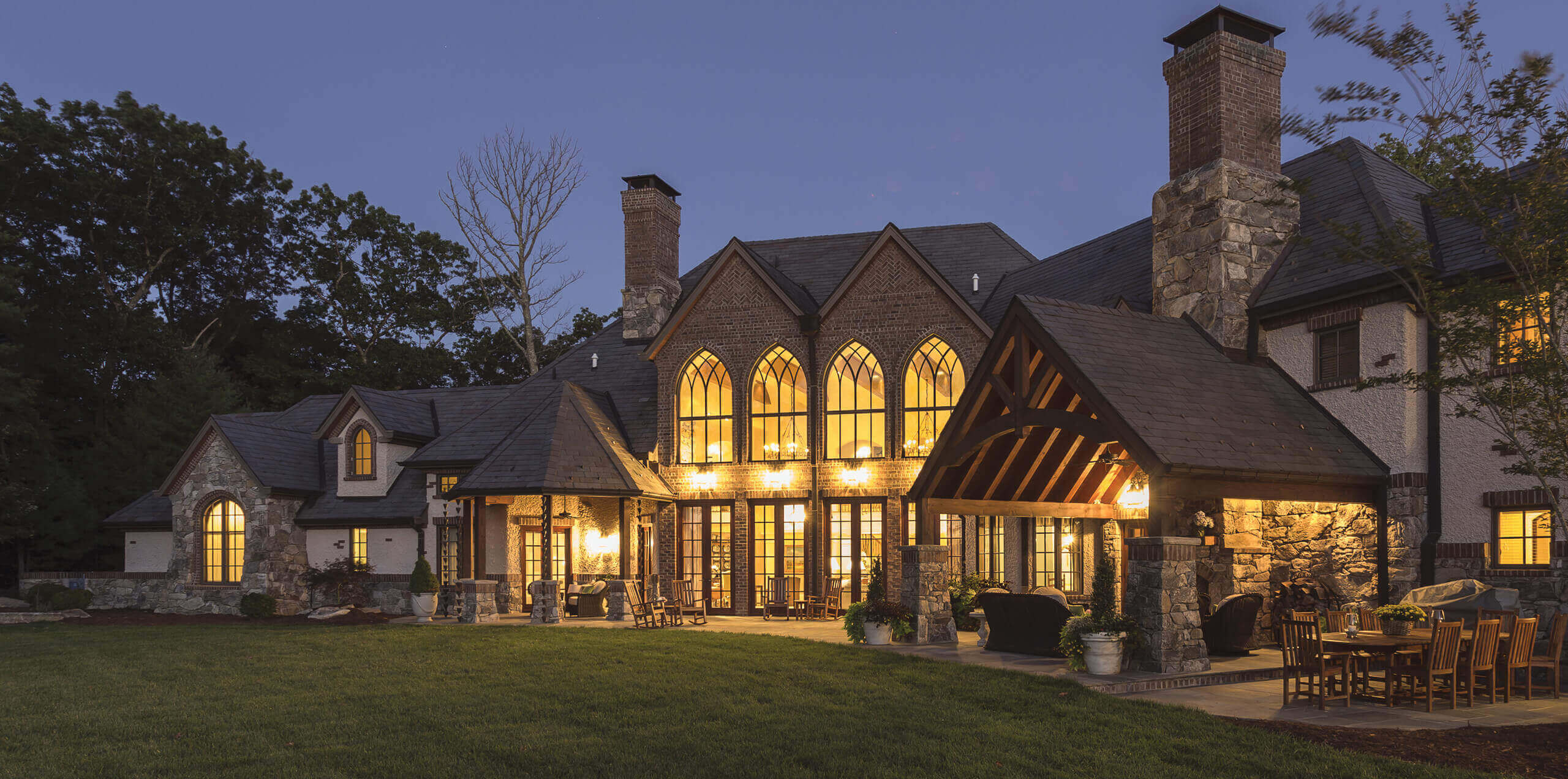
An outdoor fireplace can turn a covered terrace or porch into one of the most-used areas of a mountain home. It can also send smoke directly into the seating area if wind and ventilation are ignored.
Placement should account for prevailing breezes, roof coverage, nearby doors and windows, and furniture. Smoke needs a clear path out. Heat needs to reach the people sitting nearby instead of disappearing through an oversized opening.
The surrounding area matters too. Is there enough space for seating? Will people dine nearby? Is the kitchen easy to reach? Can cushions and firewood be stored out of the weather?
An outdoor fireplace works best as part of a larger living area, not as an isolated feature at the edge of the property.
Adding a Fireplace During a Renovation
Installing a fireplace in an existing home may involve structural support, venting routes, roof work, foundation requirements, and limited space.
An existing chimney may be reusable, repairable, or unsuitable for the new fireplace. A new vent path could affect rooms above or intersect with roof framing. Heavy masonry may require additional support below.
Sometimes a gas insert or another compact system works best within the existing structure. In other cases, a larger renovation creates the opportunity to relocate the fireplace and improve the room around it.
The existing house will have a say in what is practical.
A Fireplace Should Earn Its Place
Fireplaces require floor space, money, materials, and coordination. They should provide something worthwhile in return.
That might be dependable heat during a cold snap. It could be an outdoor gathering place that keeps people on the porch later into the fall. It may simply become the spot where the family settles after dinner.
The fireplaces that get used are usually easy to operate, comfortable to sit near, and located where life already happens.
Brock Builders constructs custom homes and completes renovations throughout Asheville, Hendersonville, and Western North Carolina. Whether a project includes one fireplace or several, each should suit the home, the room, and the people who will use it.
View Brock Builders’ custom homes:
https://www.brockbuildersinc.com/custom-homes.php
Explore renovation services:
https://www.brockbuildersinc.com/renovations.php
Discuss your project with Brock Builders: